The Wellness-Fashion Complex Strikes Again
Last Saturday morning, armed with nothing but good intentions and a contactless payment card, I found myself queuing outside a converted warehouse in Hackney for what promised to be a 'transformative journey towards clothing peace'. The 'Body Neutrality Fashion Workshop', hosted by someone called Blythe (naturally), claimed it would liberate me from the tyranny of aesthetic judgement.
Three hours and £65 later, I emerged into the East London drizzle with a profound new anxiety about whether my trousers were making a statement about my relationship with my ankles.
Meet Your Guru (She's Wearing £300 'Intentional' Jeans)
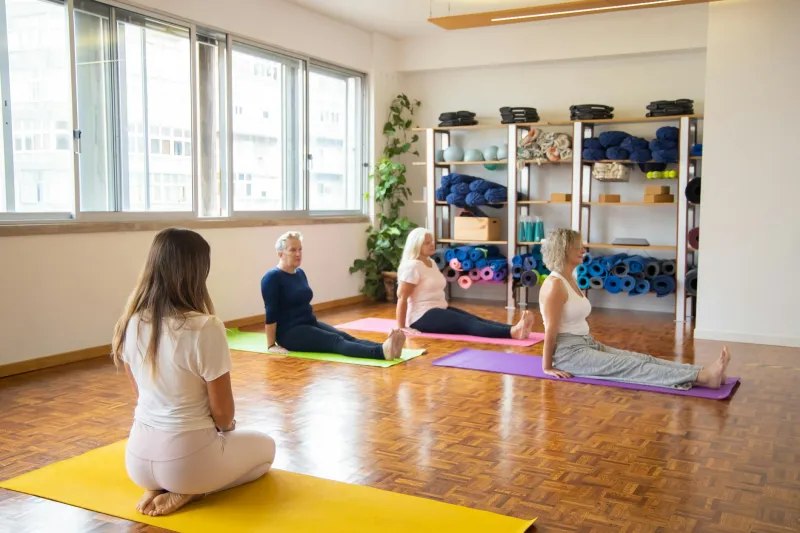
Blythe – who introduced herself as a 'somatic style facilitator' with the kind of confidence usually reserved for actual medical professionals – welcomed our group of twelve into a space that looked like someone had feng shui'd a community centre to within an inch of its life.
She was wearing what she later described as 'intentional denim' (£295, as it transpired, from a brand that sources its cotton using meditation techniques), paired with a cream jumper that had apparently been 'ethically sourced from sheep who'd consented to the process'.
"Today, we're going to unlearn everything society has taught us about our bodies and clothes," she announced, whilst somehow managing to make my M&S trousers feel like they were screaming insecurities into the ether.
The Circle of Sartorial Shame
The workshop began with what Blythe called a 'clothing check-in', where each participant had to describe their outfit whilst exploring their 'emotional relationship' with each garment.
"I'm wearing jeans because they make me feel safe," ventured Sarah from Dalston, apparently unaware that she was about to be psychoanalysed for choosing denim as emotional armour.
"Interesting," mused Blythe, making notes on a clipboard. "What are you protecting yourself from?"
By the time it reached me, I'd watched eleven women be gently but thoroughly dismantled over their clothing choices in the name of 'body neutrality'. When I mentioned I'd chosen my jumper because it was clean, Blythe's expression suggested I'd admitted to some form of spiritual bankruptcy.
The Trouser Interrogation
Things took a particularly surreal turn during the 'relationship with proportion' segment, where Blythe asked each of us to examine our hemlines and consider what they revealed about our 'comfort with visibility'.
"Your trousers end at a very specific point," she observed, crouching beside me with the intensity of a detective examining crucial evidence. "Just above the ankle. What do you think that says about your willingness to be seen?"
I'd never considered that my trouser length might be a window into my soul, but under Blythe's penetrating gaze, I found myself wondering if my ankles were crying out for liberation or protection.
"Perhaps," she continued, "there's something about full exposure that feels unsafe? The ankle is such a vulnerable joint."
Twenty minutes later, I was convinced my entire wardrobe was an elaborate defence mechanism against ankle-based trauma I didn't even know I had.
The Mindful Mirror Exercise
The workshop's centrepiece was something called 'neutral witnessing', where we were encouraged to look at ourselves in full-length mirrors whilst practising 'non-judgmental observation'.
"Simply notice," instructed Blythe. "Don't evaluate. Don't compare. Just witness your form in space."
What followed was perhaps the most psychologically disturbing twenty minutes of my adult life. Twelve women standing in silence, staring at their reflections whilst trying not to have opinions about what they saw.
"I'm noticing my shoulders," whispered one participant, as though she'd just discovered she had shoulders.
"Beautiful," affirmed Blythe. "And what judgments are arising?"
"I want to... adjust my posture?"
"Ah, the urge to 'fix'. Can you sit with the discomfort of not changing anything?"
By the end of the exercise, I was more aware of my physical form than I'd ever wanted to be, whilst simultaneously being told that this awareness was somehow spiritually problematic.
The Homework Assignment
As the workshop drew to a close, Blythe distributed what she called 'integration practices' – a series of daily exercises designed to maintain our newfound body neutrality.
These included: spending five minutes each morning looking at your outfit without forming opinions, practicing 'gratitude journaling' to your clothes, and something called 'proportional meditation' where you contemplate the relationship between your body and your hemlines.
"Remember," Blythe concluded, "true body neutrality means releasing attachment to looking 'good' or 'bad'. You're simply... present."
She said this whilst adjusting her own hair in the mirror behind us.
The Aftermath: A New Kind of Anxiety
Walking home through Hackney's increasingly gentrified streets, I realised that the workshop had achieved something quite remarkable: it had taken my previously uncomplicated relationship with getting dressed and transformed it into a minefield of spiritual self-examination.
Where I once simply put on clothes, I now found myself analysing the emotional subtext of every sartorial choice. Was my scarf a security blanket? Did my sleeve length suggest intimacy issues? Were my shoes making a statement about my relationship with the ground?
The Irony of Enlightenment
The most perverse aspect of the whole experience was that in promising to free me from aesthetic judgement, the workshop had simply replaced one form of self-consciousness with another. Instead of worrying whether my outfit looked good, I was now concerned about whether it represented spiritual growth.
Blythe's parting words echoed in my head: "True neutrality is the ultimate luxury." At £65 for three hours of being made to feel existentially uncertain about my trouser length, it certainly felt like a luxury I couldn't afford.
A week later, I'm still practicing 'neutral witnessing' each morning, though I suspect my mirror is judging me more than I ever judged it. And my trousers? They remain resolutely ankle-length, though now I'm convinced they're making some sort of statement about my psychological readiness for exposure.
The body neutrality movement, it seems, has been successfully monetised into just another way to feel inadequate about yourself – this time with added spiritual superiority and a significantly lighter wallet.