The Consultation That Changed Everything
It started, as these things often do, with a sponsored Instagram post. "Transform your wardrobe sustainably with my bespoke preloved curation service," promised Seraphina, a 23-year-old with 47,000 followers and what appeared to be the entire contents of a vintage shop draped artfully around her Hackney flat. Her bio read 'Ethical Fashion Consultant | Sustainable Style Guru | Saving the planet one preloved piece at a time ✨🌱'
I should have known I was in trouble when her consultation fee was £85 for a forty-five-minute Zoom call, but I'd been feeling guilty about my last ASOS order and apparently, this is what passes for penance in 2024.
"I can immediately see the problem," Seraphina announced within thirty seconds of our video call, squinting at my wardrobe through her MacBook camera. "You're preloved wrong. Your entire approach to secondhand shopping is, frankly, quite violent to the circular economy."
I'd never considered my charity shop browsing habits violent to anything except my bank balance, but Seraphina was just getting started.
The Diagnosis: Sustainable Shopping Dysfunction
"You're what we call a 'grab-and-go consumer,'" she continued, consulting what appeared to be a colour-coded spreadsheet. "You see something cheap in a charity shop and you buy it without considering the energetic alignment between the piece and your authentic self. This is exactly the kind of mindless consumption that's destroying the preloved ecosystem."
Apparently, my approach to buying a £3 jumper from Cancer Research was somehow more environmentally damaging than fast fashion. Who knew that browsing Oxfam without a strategic framework was contributing to the climate crisis?
Seraphina's solution was comprehensive: a 'Sustainable Style Transformation Package' that would, over the course of six weeks, completely rebuild my relationship with secondhand clothing. The price? A mere £450, plus expenses, plus a 15% commission on any items she sourced for me, plus VAT.
"Investment pieces require investment thinking," she explained when I audibly gasped at the figure. "You can't put a price on authentic sustainable living."
Week One: The Purge
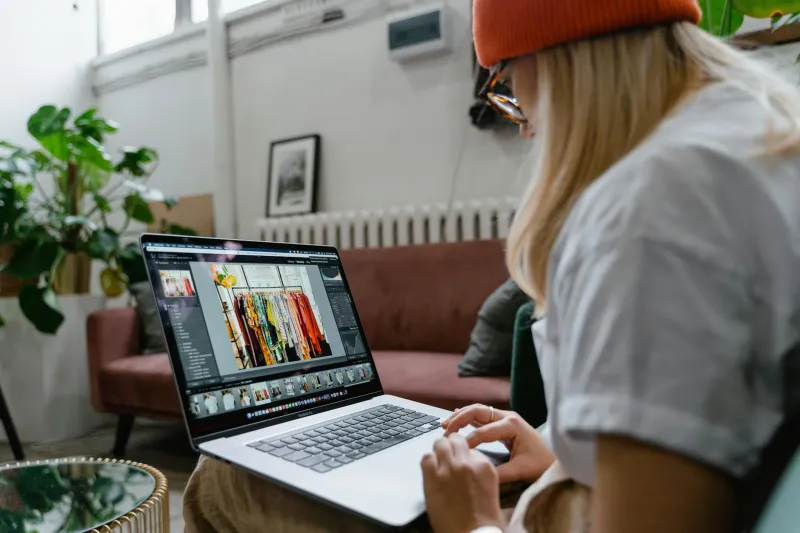
The process began with what Seraphina called a 'Wardrobe Energy Audit.' This involved me photographing every single item I owned and sending the images to her for analysis. She would then categorise each piece according to her proprietary 'Sustainable Style Matrix'—a system that apparently took into account the item's 'energetic frequency,' its 'circular economy potential,' and something called its 'preloved pedigree.'
The results were devastating. Of my 47 photographed items, only three made it into the 'Energetically Aligned' category: a vintage band t-shirt I'd bought for £2 in Brighton, a pair of Levi's jeans from 1987, and, inexplicably, a M&S cardigan my mother had given me.
"The rest," Seraphina informed me via a fifteen-page PDF report that arrived at 11:47 PM, "are blocking your sustainable style journey and need to be mindfully released."
Apparently, 'mindfully released' meant sold through Seraphina's own Depop account, with her taking a 40% commission for the 'curation and storytelling services' she provided. My £8 Zara blazer became 'Vintage-inspired tailoring with contemporary edge - perfect for the conscious consumer' and sold for £35. I received £21. Seraphina kept £14 for writing the description.
The Sourcing Nightmare
With my wardrobe apparently cleansed of its toxic energy, it was time for the 'Intentional Acquisition Phase.' This is where things got expensive.
Seraphina charged £25 per hour for 'sourcing consultations,' during which she would scroll through Depop, Vinted, and various vintage websites while I watched via screen share, offering commentary on pieces that might align with my 'authentic sustainable aesthetic.'
"Oh, this 1970s wrap dress is calling to me," she'd say, mouse hovering over a £180 polyester number. "I'm getting very strong energy from this piece. It wants to be part of your journey."
The dress, it transpired, was being sold by one of Seraphina's friends. The 'vintage' label had been added by the seller. The dress was from & Other Stories, 2019.
But by this point, I was in too deep. I'd already spent £340 on consultations and felt obligated to see the process through. This is what Seraphina called 'commitment to your sustainable transformation,' and what I now recognise as a very expensive form of Stockholm syndrome.
The Hidden Costs of Conscious Consumption
By week four, the true cost of my sustainable styling journey was becoming clear. Beyond Seraphina's fees, there were 'authentication charges' (£15 per item to verify that pieces were genuinely vintage), 'energetic cleansing services' (£8 per item to remove 'previous owner energy'), and something called a 'Circular Economy Impact Fee' that seemed to exist purely to make me feel better about spending £90 on a secondhand H&M skirt.
"Sustainable fashion isn't about saving money," Seraphina reminded me when I questioned why my preloved shopping spree was costing more than a full-price Zara haul. "It's about conscious consumption and energetic alignment. You can't put a price on living authentically."
She could, apparently. And that price was approximately £847.50, not including the cost of the actual clothes.
The Final Tally
After six weeks under Seraphina's guidance, I owned twelve 'curated preloved pieces' that had cost me a total of £1,200. For comparison, I could have bought an entire new wardrobe from COS for roughly the same amount, and it would have come with receipts and the knowledge that nobody had worn it while going through a difficult divorce.
But the real revelation came when I started doing my own research. Half of the 'vintage' pieces Seraphina had sourced were actually contemporary items being resold at inflated prices. The 'rare 1980s designer blazer' was from Mango, 2021. The 'authentic vintage band tee' had been printed last month in Shoreditch.
"The line between vintage and contemporary is very fluid," Seraphina explained when confronted with this evidence. "What matters is the energy of the piece, not its literal age. You're thinking very linearly about time."
The Sustainable Style Industrial Complex
What I'd stumbled into, I realised, was an entire ecosystem of people who'd found a way to monetise our collective guilt about fast fashion. The 'sustainable styling' industry has created a new form of consumption that's somehow more expensive and more anxiety-inducing than the original problem it claims to solve.
Seraphina, it turned out, was part of a growing network of 'sustainable fashion consultants' who'd discovered that people would pay premium rates for the privilege of being told their shopping habits were morally wrong. It's therapy, personal shopping, and environmental activism rolled into one expensive package.
"The irony," explains Dr. Rebecca Thornfield, a consumer psychologist at London Business School, "is that this kind of 'conscious consumption' often results in people buying more, not less. They're just paying extra for the moral framework that makes them feel better about it."
Lessons from the Preloved Trenches
Six months later, I'm back to buying £3 jumpers from Cancer Research, and I've never felt more environmentally sound. My carbon footprint is probably smaller, my wardrobe is more affordable, and I no longer need anyone to tell me whether my clothes have good energy.
Seraphina, meanwhile, has pivoted to offering 'Sustainable Lifestyle Coaching' and charges £200 per session to help people align their entire existence with circular economy principles. Her waiting list is three months long.
Somewhere in East London, there's probably a woman paying £85 to be told that her approach to buying secondhand books is energetically violent. And honestly? She probably deserves everything she gets.