Move Over Quiet Luxury: Britain's Most Dominant Male Aesthetic Is A Faded Gap Hoodie From The Second Blair Term
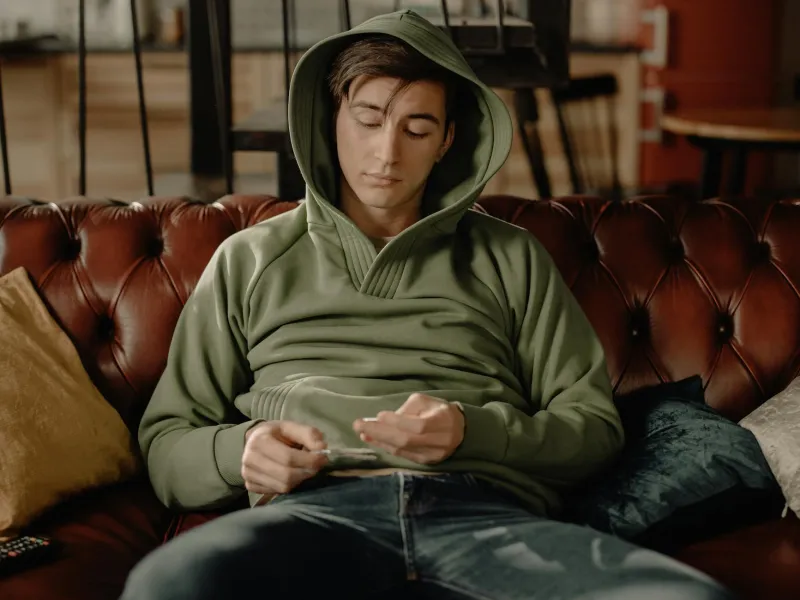
Move Over Quiet Luxury: Britain's Most Dominant Male Aesthetic Is A Faded Gap Hoodie From The Second Blair Term
Somewhere in a Clapham semi-detached, a 38-year-old man named either Dave or possibly Matt is pulling on a hoodie. It is grey. It has a small logo on the chest — a university he attended for three years, learned to make pasta, and has spoken about in job interviews ever since. The hood drawstrings went missing during the second Bush administration. He has never once considered replacing it.
According to a new trend report from Shoreditch-based forecasting consultancy Chromatic Futures, this man is not a fashion failure. He is, in fact, a pioneer.
"What we're witnessing," explains Tarquin Holt-Jessop, Chromatic Futures' Head of Cultural Semiotics and a man who charges £4,000 a day to explain things your mum already knows, "is a wholesale rejection of aspirational dressing in favour of what we're calling Heritage Slob Core. It's post-ironic, it's emotionally authentic, and it is absolutely everywhere."
The report, titled Dressed to Regress: How British Men Are Reclaiming Comfort as Currency, claims that Heritage Slob Core has now overtaken quiet luxury, coastal grandmother, and 'inadvertent Wetherspoons manager' as the dominant aesthetic among UK men in the 28-to-45 demographic. The defining garment? An item of branded knitwear or fleece, acquired between 1999 and 2007, that has survived at minimum four house moves, one relationship breakdown, and a brief but sincere attempt at 'getting into running.'
The Wardrobe Archaeology of the British Male
To understand Heritage Slob Core, one must first understand the British man's relationship with clothes, which can be summarised as: largely adversarial, occasionally baffled, and ending in a Primark bag-for-life.
For decades, the fashion industry has attempted to engage the average UK male with varying degrees of desperation — the metrosexual moment, the lumbersexual pivot, that deeply confusing period when everyone was supposed to own a rollneck. None of it stuck. What has stuck, with the tenacity of a decade-old Marmite stain, is the university hoodie.
Data from Chromatic Futures suggests that 67% of British men between 30 and 44 currently own at least one item of clothing they acquired before the age of 24, wear it at least twice weekly, and feel, on some level, that it still 'does the job.' A further 23% describe their hoodie as 'basically fine' and look mildly affronted when pressed further.
"The Gap fleece. The Loughborough University quarter-zip. The Canterbury rugby top that hasn't seen a pitch since 2001," Holt-Jessop intones reverently. "These are not relics. They are anchors. They tether the modern British male to a simpler time — before mortgages, before 'core strengthening,' before anyone expected him to have opinions about olive oil."
From Slob to Statement: The Industry Scrambles
The fashion press, to its immense credit, has wasted no time attempting to monetise this discovery.
GQ ran a piece last month titled 'The New Nonchalance,' featuring a model in a tastefully distressed Levi's sweatshirt priced at £285, photographed against raw concrete in a way that suggested he'd wandered off a building site and into a very good life. Several menswear brands have begun offering 'worn-in' cotton fleeces with 'vintage collegiate detailing' — which, in plain English, means they've paid someone to make a new hoodie look like the one you already own and refuse to throw away.
Retail analysts at Threadline Partners estimate the 'intentional casualwear' market grew by 34% last year in the UK alone, driven almost entirely by brands attempting to sell men back the aesthetic they've been living by default since Tony Blair was still considered a reasonable fellow.
"It's genuinely extraordinary," says one buyer at a major department store, who asked not to be named because she's still slightly embarrassed about the whole thing. "We're essentially selling men permission slips. The hoodie they've had since Fresher's Week was always fine. Now we're telling them it's fashion, and they're buying a new one to prove it."
The Wives and Partners Remain Unconvinced
Not everyone is ready to see Heritage Slob Core elevated to cultural movement.
A decidedly unscientific poll conducted via our own Instagram stories last Tuesday found that 78% of women partnered with men who identify — loosely, and without having asked — with this aesthetic, describe it less as 'post-ironic lifestyle dressing' and more as 'he won't let me wash it because he thinks it'll fall apart.'
One respondent from Harrogate wrote: "My husband has a Nottingham Trent hoodie that is more hole than fabric. He wore it to my parents' anniversary dinner. He said it was 'relaxed.' I said it was a cry for help. Tarquin Holt-Jessop was not consulted."
Another, from Edinburgh: "The fashion industry has a lot to answer for. He's now calling it 'curated.' It's a Berghaus fleece with a Burger King stain. It's been 'curated' since 2005."
What Heritage Slob Core Really Tells Us
Peel back the trend-report language — the semiotics, the post-ironic framing, the breathless invocation of 'authenticity' — and Heritage Slob Core is, at its philosophical core, a story about men who found something comfortable and simply never stopped wearing it.
Which is, if we're honest, not a trend. It is a personality type. It has existed since clothing was invented. Some ancient Roman almost certainly had a favourite tunic he refused to replace, and his wife almost certainly had opinions about it.
What is new is the fashion industry's apparently limitless capacity to identify ordinary human behaviour, apply a compound noun to it, photograph it on someone cheekboned near an exposed brick wall, and charge a premium for the privilege of participating in something you were already doing for free.
Tarquin Holt-Jessop, for his part, remains bullish. "Heritage Slob Core isn't going anywhere," he told us, speaking from what appeared to be a converted warehouse in Bethnal Green. "It's a movement. It has momentum. It has meaning."
He was, we couldn't help but notice, wearing a very nice cashmere crewneck.
It cost, he mentioned unprompted, £340.
The hoodie, apparently, is for other people.