The Great Linen Uprising of 2024
Marks & Spencer has done it again. Not content with merely selling clothes, Britain's most determinedly middle-class retailer has decided to package an entire lifestyle fantasy and sell it back to us for £45.99 per linen shirt. The 'Coastal Grandmother' collection has officially landed, and somewhere in a cottage overlooking the Jurassic Coast, a woman named Penelope has just experienced what can only be described as a spiritual awakening in the homeware section.
 Photo: Jurassic Coast, via kittiaroundtheworld.com
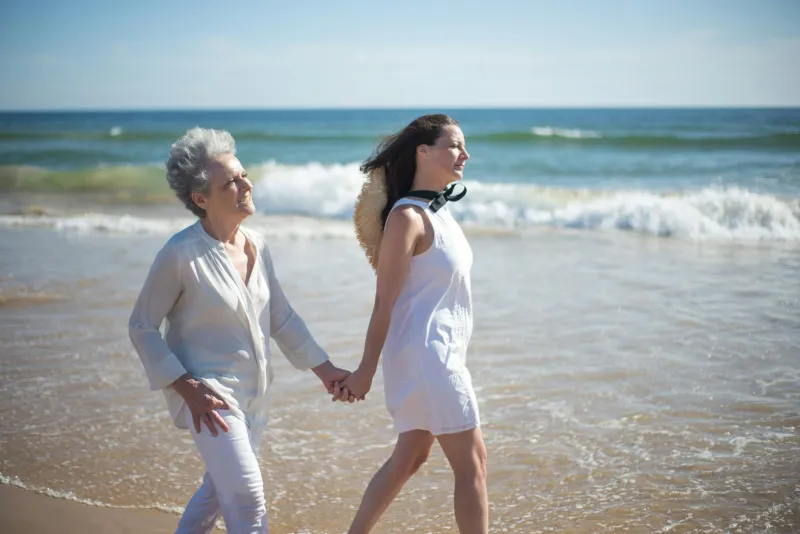
The collection, which appears to have been curated by someone who watched exactly one Nancy Meyers film and decided that constituted market research, promises to transform ordinary British women into the sort of people who 'summer' rather than simply 'go on holiday'. The aesthetic is unmistakable: think cream linen trousers that require professional laundering, wicker baskets that serve no discernible purpose, and enough nautical rope detailing to moor a small yacht.
The Science of Seaside Aspiration
According to Dr. Miranda Whitfield-Jones, Professor of Aspirational Retail Psychology at the University of Bournemouth (a position we're reliably informed exists), the Coastal Grandmother phenomenon represents "the commodification of a very specific type of middle-class ennui."
 Photo: University of Bournemouth, via study-in-uk.com
"What M&S has achieved here is remarkable," explains Whitfield-Jones from her office, which we're told overlooks a car park but probably smells faintly of sea salt and regret. "They've identified women who feel trapped by their suburban existence and offered them a £400 solution that comes with its own tote bag."
The collection's genius lies in its specificity. This isn't just beachy fashion—it's fashion for women who want to be the sort of person who owns a second home in Cornwall but settles for a long weekend in Southwold. It's for women who've read 'The Seven Husbands of Evelyn Hugo' twice and consider themselves literary. It's for women who want to emanate the energy of someone whose biggest worry is whether the local fishmonger will have fresh crab.
The Great Karen Migration
Perhaps most remarkably, the collection appears to have triggered what sociologists are calling 'The Great Karen Migration'—a mass movement of women named Karen from inland market towns to coastal regions, all wearing identical cream linen and carrying the same wicker handbag.
"I've counted seventeen Karens on Aldeburgh high street this morning alone," reports local resident Janet Pemberton. "They're all wearing the same outfit and they all look slightly confused, like they're not quite sure how they got here but they're committed to the journey."
The phenomenon has created unprecedented scenes at National Trust car parks across the South Coast, where queues of women in £65 'relaxed-fit coastal cardigans' wait patiently to photograph themselves looking windswept and literary against crumbling sea walls.
The Economic Impact of Aspirational Linen
The collection's impact on the British economy has been swift and merciless. Independent boutiques in seaside towns report a curious phenomenon: women arriving to buy 'something more authentic' than M&S, only to discover that authentic coastal living costs approximately three times as much and doesn't come with the same level of customer service.
"I had a woman come in yesterday asking for 'something more real than the high street coastal look,'" explains Fenella Brightwater, owner of Driftwood Dreams in Whitstable. "I showed her a genuine vintage fisherman's smock for £280 and she asked if we accepted Sparks points. The cognitive dissonance was extraordinary."
Meanwhile, the collection has created an entirely new category of social anxiety: Coastal Grandmother Impostor Syndrome. Support groups have reportedly formed in Tunbridge Wells and Guildford for women struggling with the gap between their M&S-enabled coastal grandmother aesthetic and their actual lives, which primarily involve school runs and arguing with British Gas.
The Dark Side of Linen Dreams
But perhaps the most troubling aspect of the Coastal Grandmother phenomenon is its exclusivity disguised as accessibility. While M&S prices the collection within reach of middle England, the lifestyle it represents—second homes, leisurely seaside walks, the luxury of choosing linen over practicality—remains firmly out of reach for most.
"What we're seeing is the democratisation of an aesthetic without the democratisation of the lifestyle it represents," observes retail anthropologist Dr. Sarah Thornfield. "Women are buying into a fantasy of financial security and leisure time that the clothes can't actually provide."
The irony isn't lost on seaside communities themselves, where actual grandmothers who've lived coastal lives for decades watch bemused as urban women arrive in expensive interpretations of their everyday clothing, desperately seeking authenticity in a collection designed in a corporate office in London.
The Verdict: Resistance Is Futile
As autumn approaches and the initial wave of Coastal Grandmother enthusiasm begins to wane, M&S has reportedly begun working on their next lifestyle collection: 'Urban Hermit'—for women who want to look like they've chosen to live alone with seventeen cats, rather than having cats choose them.
But for now, the Coastal Grandmother reigns supreme, and somewhere in Salcombe, a woman named Patricia is walking her labrador along the beach, wearing £200 worth of M&S linen and feeling, for perhaps the first time in months, exactly like the person she always thought she might become.
The fact that she's actually called Sharon and the dog belongs to her neighbour is, frankly, beside the point.