Seven Days of Greige: How I Became Indistinguishable From a Department Store Display and Found Unlikely Enlightenment
Seven Days of Greige: How I Became Indistinguishable From a Department Store Display and Found Unlikely Enlightenment
By Gerald 'Gezza' Fothergill
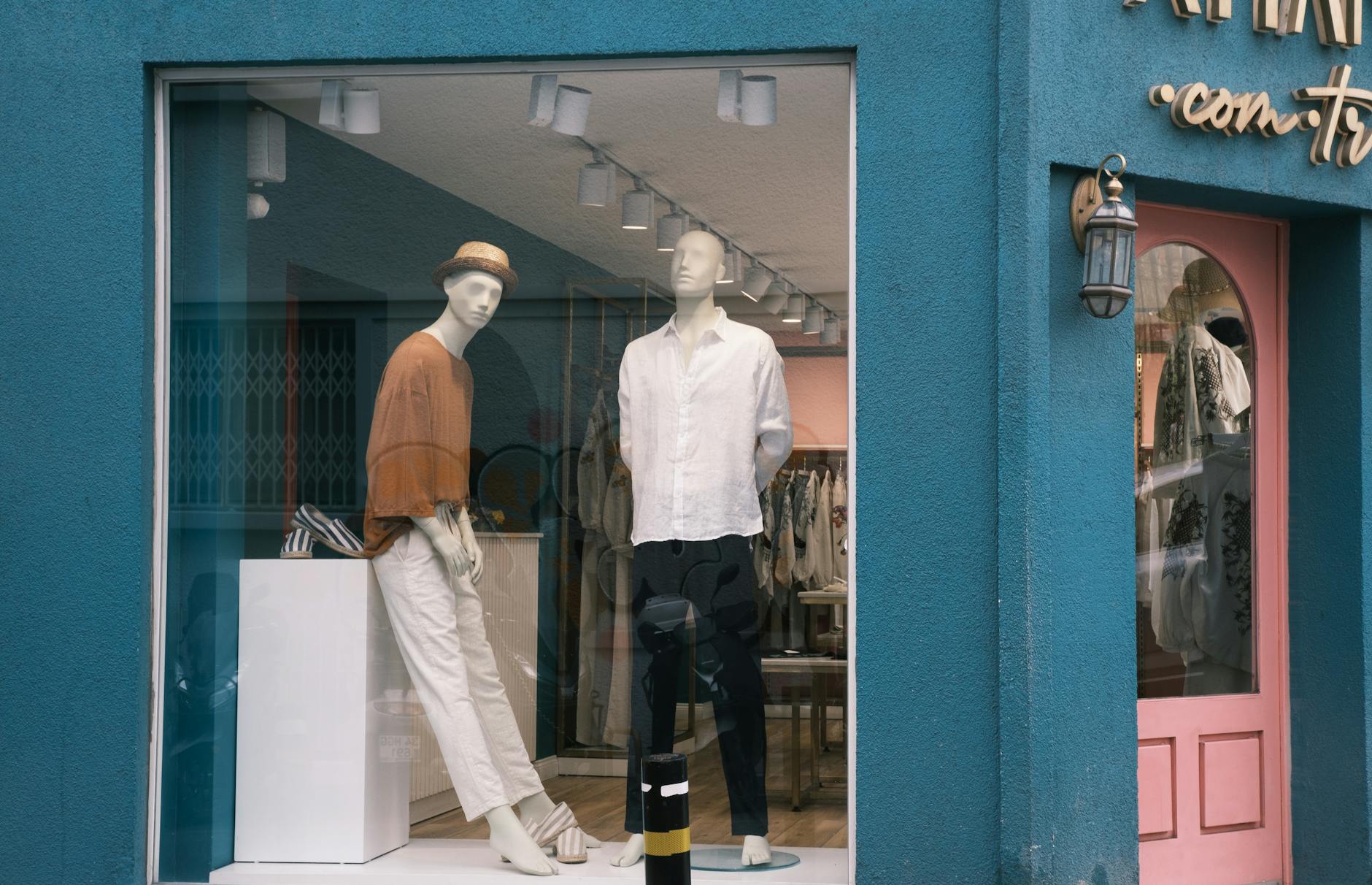
It started, as most of my worst ideas do, on a Tuesday evening in the John Lewis menswear department on Oxford Street. I was waiting for my wife, who had gone to investigate a Le Creuset casserole dish with the focused intensity of a jeweller appraising a diamond. And there he was — the mannequin. Slim. Headless. Wearing a pair of stone-coloured chinos, a pale blue Oxford shirt, a navy quilted gilet, and what I can only describe as "shoes that exist." He radiated a kind of aggressive, weaponised normality. He was dressed for absolutely nothing in particular, and somehow, against all odds, he looked fine.
I took a photograph. I went home. I built a wardrobe around him.
The Uniform of the Quietly Aspirational
Let me be clear about what we are dealing with here. The John Lewis mannequin aesthetic is not a fashion statement. It is a fashion non-statement. It is clothing designed to signal that you are a responsible adult who recycles, has a good mortgage rate, and once described a holiday to the Cotswolds as "just what we needed." The palette runs exclusively from ecru to slate, with occasional daring detours into what the label calls "teal" but is, in practice, simply a darker version of grey.
For my experiment, I assembled the following: two pairs of chinos (one stone, one "oat" — yes, oat), a selection of shirts in colours named after weather phenomena ("mist," "overcast," "cloud"), a navy gilet from the Gent's Casual section that cost £89 and appeared to have no discernible function, and a pair of brogues so sensible they practically filed their own tax return.
Total spend: £347. Total personality expressed: approximately zero.
Monday: The Invisibility Begins
I walked into the office on Monday morning fully expecting at least one comment. Perhaps a raised eyebrow from Karen in accounts, who once told me my burgundy corduroy jacket looked "a bit much for a Wednesday." Nothing. Absolutely nothing. My colleague Dave from IT walked past me, through me almost, like I was a soft furnishing. I poured myself a coffee. I sat at my desk. I was, to all intents and purposes, a human screensaver.
By lunchtime I had begun to wonder if I had accidentally become a ghost.
The Deeper Truth About British Fashion Camouflage
Here is what my experiment revealed, and it is more unsettling than I anticipated: dressing like a John Lewis mannequin in Britain is not a failure of imagination. It is, in fact, an evolved survival strategy.
We are a nation psychologically scarred by the memory of anyone who tried too hard. We have collective cultural PTSD from the bloke at the Christmas party in 2003 who wore a statement shirt and wouldn't stop talking about it. Standing out in British professional life is not aspirational — it is suspicious. If you are too well dressed, people assume you are either in sales or having some sort of breakdown. The safest thing you can do, sartorially speaking, is to look like you bought everything at the same time from the same floor of the same shop, which is, of course, exactly what I had done.
The mannequin, I realised, is not a figure of mockery. He is a prophet.
Wednesday: A Crisis of Greige
By the midpoint of the week, something curious happened. I stopped noticing what I was wearing. I would get dressed in the morning with the same emotional investment I bring to loading the dishwasher. Shirt. Chinos. Gilet. Brogues. Done. There was a strange, monastic peace to it — the freedom that comes from having absolutely no choices worth making.
I also noticed, for the first time, how many of my colleagues were already living this life. The office was, upon closer inspection, basically a John Lewis floor display that had learned to use spreadsheets. Paul from marketing in his slim navy trousers and pale pink shirt. Sarah from HR in her camel-coloured wrap cardigan and taupe trousers. We were all mannequins. We had always been mannequins. The shop floor was everywhere.
Thursday: Someone Almost Said Something
On Thursday, a flicker of hope. My line manager, Graham, paused while walking past my desk, looked at me for a moment with faint recognition, and said, "New gilet?"
"Yes," I said.
"Mm," said Graham, and walked away.
This was, I believe, the most intimate moment of connection my experiment produced.
The Uncomfortable Conclusion
On Friday, I wore a red jumper. Not a bold red — more of a "dusty rose" from the M&S sale, which is arguably still within the acceptable spectrum — and within twenty minutes, three separate people asked if I had a job interview. One asked if I was "all right." Karen from accounts said it was "a bit much."
And there it is. The great British fashion paradox, gift-wrapped in a quilted gilet: we dress to disappear, then feel faintly alarmed when anyone tries to reappear. The John Lewis mannequin is not a symbol of aspirational mediocrity — he is a mirror. Headless, yes. Without hands, technically. But holding up a reflection of a nation that has decided, collectively and without any formal meeting, that the highest sartorial achievement is to look like you just popped out for a nice walk and ended up at a farmers' market.
I have kept the gilet. It is genuinely very comfortable and the pockets are excellent.
Some experiments change you.
Gerald 'Gezza' Fothergill is Vogue Victims' Senior Correspondent for Things That Are Technically Fine. He is currently wearing chinos.