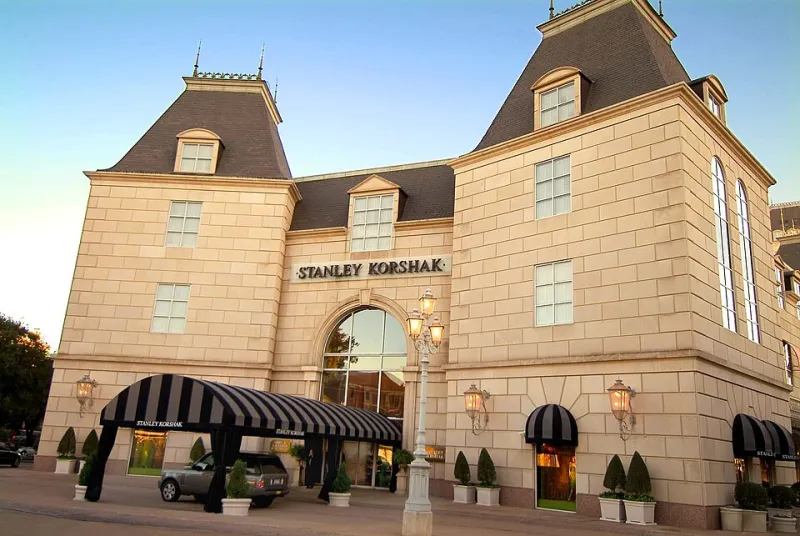
Uniqlo Opens on the High Street and the Women Who Spent Three Years Shaming You Into Linen Are Now Queuing in Complete Silence
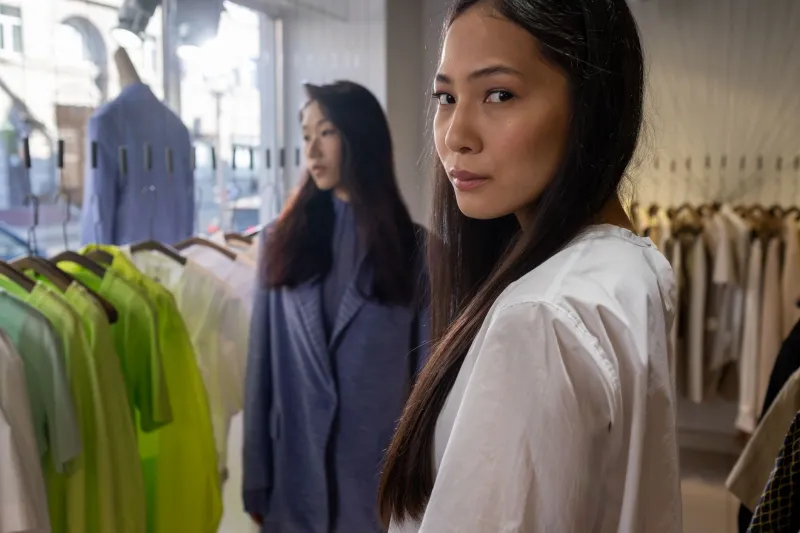
There is a particular kind of silence that only exists in two places: the moment before a GP delivers news you already suspected, and the Uniqlo cashmere section on a Saturday morning when two members of the same book club make eye contact across a rail of cloud-grey crew-necks.
We have studied this silence. We have documented it. We have watched it bloom across a woman's face as she processes the fact that her closest friend — the one who forwarded her four separate Guardian articles about polyester microplastics — is holding not one but three ribbed mock-neck tops in colourways that are, frankly, indistinguishable from each other.
Uniqlo has arrived on your high street. And Britain's ethical fashion community is in full, dignified, completely wordless crisis.
The Loophole That Dare Not Speak Its Name
For the uninitiated, allow us to explain the moral architecture at work here. Uniqlo is, by any reasonable measure, a global fast fashion corporation. It operates thousands of stores across multiple continents, produces garments at scale, and is owned by one of the wealthiest men in Japan. This is not a cottage industry. This is not a woman named Rowan hand-dyeing linen smocks in a Hebridean barn.
And yet.
Somewhere between 2021 and now, a consensus quietly formed among Britain's middle-class women that Uniqlo exists in a separate ethical category entirely — a kind of morally neutral zone, like a UN buffer state, where the usual rules of conscious consumption do not apply. The reasoning, when pressed, tends to involve words like 'investment', 'Japanese craftsmanship', 'lifetime basics', and — our personal favourite — 'considered'.
No one is entirely sure who first decided that Uniqlo was considered. It may have been a Substack. It may have been a woman named Harriet at a dinner party in Clapham. Regardless, the consensus is now ironclad, and seventeen ribbed tank tops in slightly different shades of stone are apparently the foundation of a sustainable wardrobe.
The Queue Itself Is an Anthropological Event
We arrived at 9:47am, thirteen minutes before opening. The queue stretched past the former Topshop unit and doubled back past a Greggs, which no one in the queue acknowledged. The demographic was precise to the point of being eerie: women between thirty-four and fifty-two, a significant proportion wearing the Uniqlo Ultra Light Down jacket they purchased at a previous Uniqlo, and at least four canvas tote bags bearing the names of independent bookshops that closed during the pandemic.
The conversation was muted and largely logistical. 'I need the HEATTECH in a medium.' 'Do you think they'll have the wide-leg trousers in petite?' 'I'm only here for the cashmere.' This last statement was delivered with the energy of someone explaining they've only come to the party to pick up their coat.
At no point did anyone mention that they were shopping at a corporation with a market capitalisation exceeding thirty billion dollars. This was not an oversight. This was discipline.
The Cashmere Section Incident
At 11:23am, it happened. Two women — let's call them Clare and Nicola, because statistically there is a strong chance their names are Clare and Nicola — arrived at the cashmere section simultaneously from opposite directions. Clare was holding a sage green crew-neck. Nicola was holding an oat crew-neck. They had sat next to each other at book club eleven days previously, where Nicola had spent twenty-five minutes explaining why she no longer shopped at H&M.
The silence lasted approximately four seconds. It contained multitudes.
What passed between them in those four seconds was a complex negotiation involving: mutual recognition, a brief assessment of whether the other person's purchase could be framed as worse than one's own, and a collective decision to proceed as if the entire encounter had taken place in international waters.
'These are brilliant, aren't they,' said Clare, finally.
'Incredible quality for the price,' said Nicola.
They parted. They did not discuss it at book club. They will never discuss it at book club. The cashmere section has become the confessional booth of the ethical fashion movement, and absolution is available in twelve colourways.
The Seventeen Tank Tops Problem
Perhaps the most impressive psychological feat performed by the Uniqlo devotee is the justification of volume. The entire premise of ethical consumption — the thing these women spent three years explaining to their sisters-in-law over Christmas dinner — is that you buy less, but better. You invest in fewer pieces. You resist the churn.
And yet the average Uniqlo haul, as observed in the wild, contains: four ribbed tank tops (two in white, one in black, one in 'natural', which is also basically white), two pairs of wide-leg trousers in colours described on the website as 'off white' and 'ecru' (which are also basically white), a HEATTECH thermal layer 'just for the cold snap', and a cashmere jumper that the purchaser describes as 'the last cashmere jumper I'll ever need to buy'.
They will buy another cashmere jumper in November. It will be in 'light grey'. It will also be the last cashmere jumper they'll ever need to buy.
This is not hypocrisy. This is investment. The distinction is important and must not be examined too closely.
What Uniqlo Has Actually Achieved
In fairness — and we are nothing if not fair, here at Vogue Victims — Uniqlo has pulled off something genuinely remarkable. It has convinced an entire demographic that minimalism and volume are compatible, that 'basics' are a moral position rather than a product category, and that the correct shade of greige can function as a personality.
It has also, more quietly, given Britain's ethical fashion community somewhere to shop without having to perform the full theatre of sustainable consumption. No one at Uniqlo is going to ask you to sign a pledge. No one is going to hand you a card explaining the carbon footprint of your transaction. You can simply purchase your fourteenth ribbed tank top in a warm, well-organised environment and walk back out into the world with your superiority complex essentially intact.
Is it a loophole? Yes. Is it a sophisticated, culturally specific, entirely British loophole? Absolutely.
Clare and Nicola would both like us to clarify that they only went in for one thing.