Dunelm's 'Wearable Home' Range Has Arrived and British Women Can No Longer Tell Where Their Sofa Ends and They Begin
Dunelm's 'Wearable Home' Range Has Arrived and British Women Can No Longer Tell Where Their Sofa Ends and They Begin
There is a woman in Solihull. She is standing in front of her bedroom mirror wearing what she believes to be a confident autumnal outfit — a rich teal wrap-effect top, wide-leg trousers in something she describes as 'a sort of warm mushroom,' and a textured cardigan with a nubbled finish that catches the light in a way she finds deeply pleasing. She looks, she thinks, like a woman who has her life together. She looks, in fact, exactly like her living room.
This is not an accident. This is Dunelm.
The Pivot Nobody Noticed Until It Was Too Late
For decades, Dunelm occupied a very specific and deeply comforting corner of the British psyche. It was where you went for blackout curtains, novelty oven gloves shaped like lobsters, and those throws that feel luxurious for approximately eleven days before pilling into what appears to be a medium-sized mammal shedding its winter coat. It was not, historically, a fashion destination.
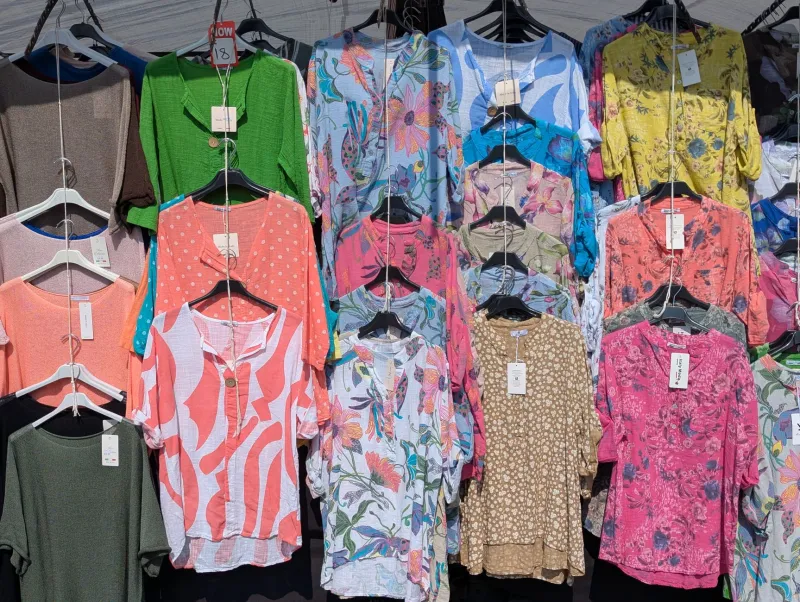
And yet here we are. The 'Wearable Home' collection — launched with the quiet confidence of a brand that knows its customer will buy almost anything if it comes in a warm neutral and is described as 'timeless' — has blurred the boundary between interior design and personal styling so completely that several Dunelm regulars have reportedly arrived at dinner parties unsure whether they are wearing their lounge or in it.
The fabrics, let us be clear, are identical. The velvet. The boucle. The 'heritage tweed-effect' that adorns both a £34.99 cushion cover and, now, a £42 unstructured blazer. If you removed the label, you could not tell them apart. In several documented cases, women have accidentally ironed a throw pillow believing it to be a pair of wide-leg culottes. One woman in Redditch reportedly sat on her own sleeve.
The Solihull Focus Group That Broke Everyone Present
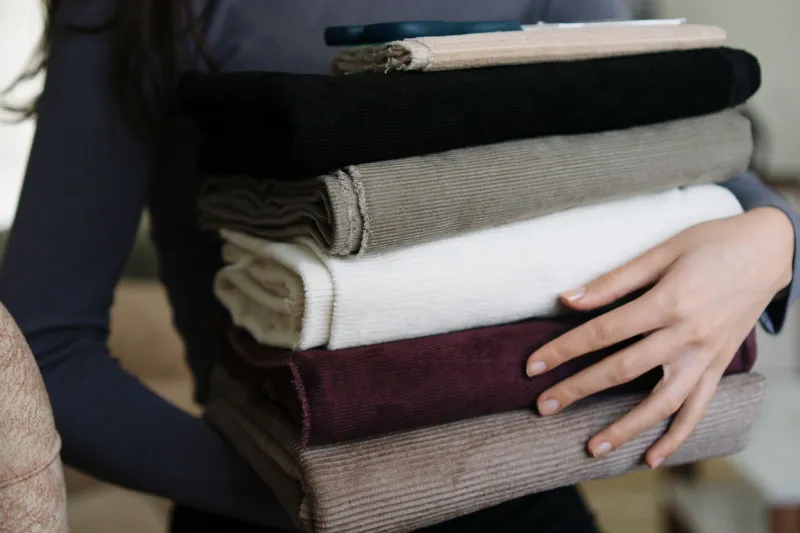
In the interest of investigative journalism — and because someone had to do it — we convened an informal focus group of twelve women in a community hall just outside Solihull to test the theory. Each participant was presented with sixteen fabric swatches and asked to categorise them as either 'clothing' or 'home furnishing.' Tea was provided. A woman named Janice brought a Victoria sponge, which felt appropriate.
The results were, scientifically speaking, catastrophic.
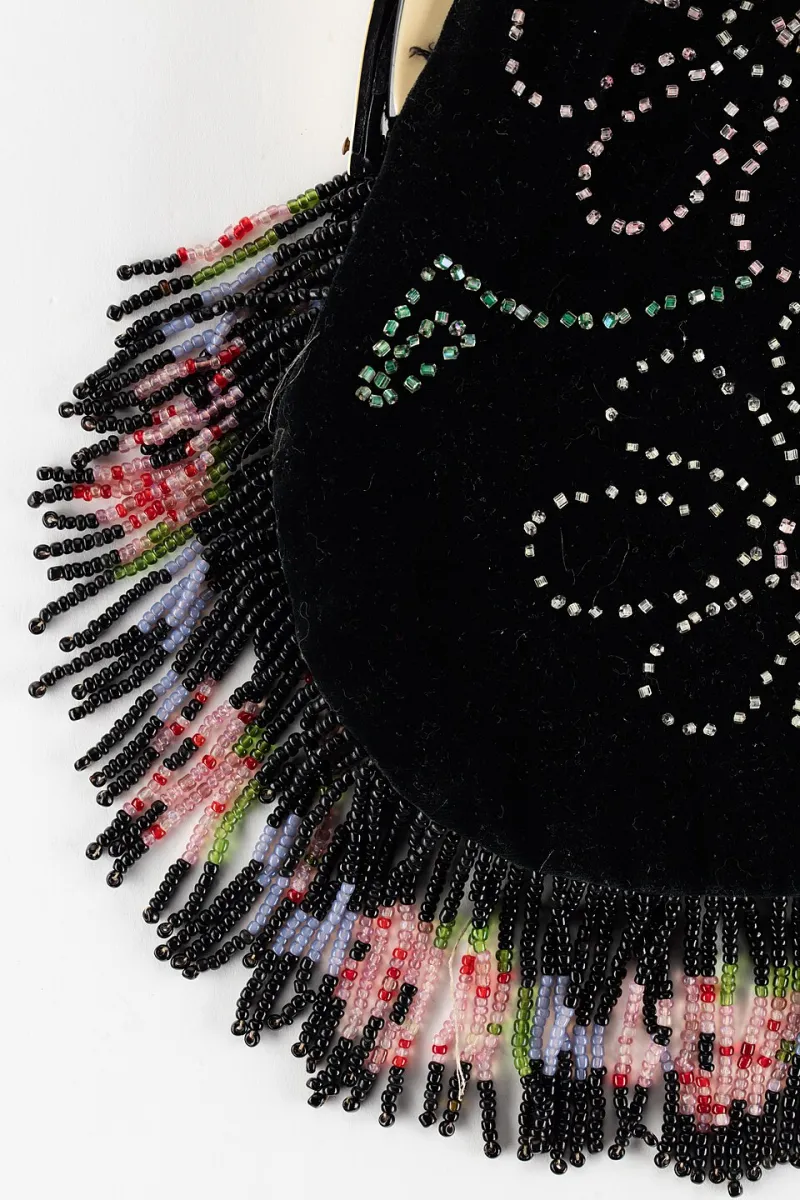
Of the sixteen swatches, the group correctly identified an average of six. The 'Autumn Ember' chenille — which is, for the record, a curtain weight fabric sold by the metre in the Dunelm haberdashery section — was unanimously declared 'a lovely blouse fabric, very Hobbs.' The 'Storm Teal' jersey, which is in fact a colourway from the new womenswear range, was identified by nine out of twelve participants as 'definitely a cushion, maybe a Roman blind.'
A woman named Beverley held a swatch of 'Warm Pebble' bouclé for several minutes before announcing, with absolute certainty, that she had the same thing on her accent chair. She was correct. She was also wearing it on her upper body. Nobody mentioned this to her until the debrief.
What This Means for British Womanhood
The implications are profound, and not entirely unwelcome, which is perhaps the most disturbing part.
For a certain demographic of British women — those who have spent the better part of a decade carefully curating what interiors magazines call a 'considered neutral palette' across their semi-detached homes — the Dunelm wearable range represents a kind of sartorial completion. The dream, never consciously articulated but apparently deeply felt, of becoming one continuous aesthetic object. A living room you can take to Waitrose.
These women do not see the problem. When we put it to several Dunelm loyalists that their outfit and their bay window treatment were, functionally, the same item, the most common response was 'Oh, I know, isn't it brilliant?' One woman in Stratford-upon-Avon told us she had deliberately matched her 'Dusk Plum' wide-leg trousers to her new velvet footstool 'for a sense of cohesion.' She used the word cohesion twice. She seemed genuinely joyful. We did not have the heart.
The Denial Phase Is Already Underway
Naturally, not everyone is embracing the transition with such equanimity. There is a significant cohort of women who have purchased items from the Dunelm range in good faith, worn them to work, and only later — upon returning home and sitting down on their three-seater sofa in Midnight Teal — had the unsettling realisation that they had been, for the duration of the working day, dressed as furniture.
The psychological processing required is considerable. These are women who took pride in their personal style. Women who have opinions about whether a sleeve should be slightly balloon or very balloon. Women who once paid £65 for a consultation with someone who told them their 'colour season' and have organised their entire wardrobe around the concept of being a Soft Autumn ever since.
To discover that your carefully assembled autumn look is essentially a loose cover for a Chesterfield is, it turns out, a significant identity event.
The Future Is Upholstered
Dunelm, to its considerable credit, has said nothing publicly about any of this. The brand continues to present its womenswear and its homeware as entirely separate endeavours, united only by a shared commitment to 'bringing warmth and comfort into everyday life,' which is a sentence that works equally well as a fashion brand mission statement and as a description of central heating.
But the evidence is mounting. The colour palettes are identical. The fabric weights are identical. The product photography — all warm lamplight, stripped wood floors, and women who look inexplicably content — is identical.
Somewhere in Dunelm's head office, we suspect, someone is laughing very quietly into a mug of something autumnal. They have achieved what no British retailer has managed before: making a woman indistinguishable from her own interior design choices, and making her feel excellent about it.
Janice, for what it's worth, bought the Harvest Dusk chenille. Both the curtain and the wrap skirt. She said it would 'tie the whole house together.'
She wasn't wrong.