East London's Ethical Fashion Safari Has Tourists Paying £55 to Feel Terrible About Their Entire Existence
Welcome to the Shame Safari
Meet Fen Blackwood, 31, ethical fashion evangelist and founder of 'Conscious Consumption Walking Tours,' who has discovered the lucrative art of making middle-class Londoners feel terrible about themselves while walking. For £55 per person (£65 on weekends), Fen leads groups of up to twelve people around East London's most achingly hip postcodes, stopping outside carefully selected shops to deliver lectures on the moral bankruptcy of modern retail.
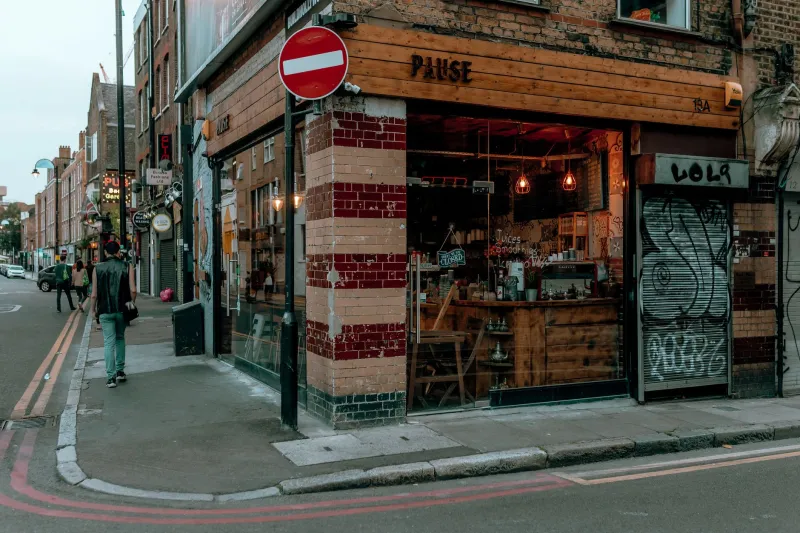
 Photo: East London, via i.pinimg.com
"The first thing I tell people is to look at their feet," explains Fen, whose own footwear appears to be constructed entirely from recycled yoga mats and good intentions. "Those trainers? That's not just footwear. That's a colonial legacy wrapped in synthetic materials and marketed to your insecurities."
The tours, which run every Saturday and Sunday, have become surprisingly popular among the sort of people who describe their relationship with consumption as 'complicated' and own multiple copies of the same ethical skincare product.
Stop One: The Depop Pop-Up of Broken Dreams
Our first destination is a temporary Depop installation in a former Victorian pub, where pre-loved clothes hang from industrial scaffolding like fashion's answer to an art gallery. The QR codes on every garment promise to tell you the 'story' of each piece, though most stories appear to involve someone called Madison clearing out her wardrobe after a breakup.
"This is performative sustainability," Fen announces to our group, which includes two lifestyle bloggers, a woman who introduces herself as a 'conscious consumer coach,' and a man who appears to be documenting everything for his PhD thesis on post-capitalist retail spaces.
"You're not saving the planet by buying someone else's mistakes. You're just outsourcing your guilt to a nineteen-year-old with a ring light and a complex relationship with her mother."
Janet, 45, from Clapham, raises her hand nervously. "But isn't buying secondhand better than buying new?"
Fen's smile could cut glass. "Better for whom? The Bangladeshi factory worker who made the original item under conditions you'd rather not think about? Or better for your Instagram aesthetic?"
Janet appears to be having some sort of existential crisis.
Stop Two: The Vintage Boutique That Costs More Than Harrods
Our next stop is 'Curated,' a vintage boutique where a 1990s slip dress costs £340 and comes with a certificate of authenticity that no one asked for. The shop assistant, who appears to be about twelve years old, explains the 'provenance' of each garment with the solemnity of a museum curator.
"This is gentrification dressed up as sustainability," Fen continues, warming to his theme. "Working-class communities have been buying and selling secondhand clothes for generations. But when middle-class people do it, suddenly it's 'vintage curation' and costs more than most people's weekly shop."
The lifestyle bloggers are frantically taking notes. One appears to be live-tweeting her moral awakening, which seems to defeat the point but no one mentions this.
"The real question," Fen continues, "is why you need to own anything at all. Have you considered that your desire to express yourself through clothing is just late-stage capitalism disguised as creativity?"
Several tour participants look like they're considering throwing themselves into the Thames.
Stop Three: The Independent Designer Boutique of Impossible Prices
Our final destination is a shop selling 'slow fashion' pieces that appear to be constructed from organic cotton and pure moral superiority. A basic white t-shirt costs £180, which the shop assistant explains is 'the true cost of ethical production' while somehow managing to sound both righteous and apologetic.
"This is where it gets interesting," Fen announces. "You can't afford to shop here, can you? But you also can't afford not to, morally speaking. You're trapped between your budget and your conscience, and that's exactly where the system wants you."
By this point, several participants appear to be having minor breakdowns. The conscious consumer coach is stress-eating a vegan energy bar, and one of the bloggers keeps muttering about needing to 'reassess everything.'
The Uncomfortable Truths Tour Conclusion
As our two-hour journey of moral flagellation concludes outside a coffee shop that charges £6 for oat milk lattes, Fen delivers his final verdict.
"The most sustainable thing you can do is stop shopping entirely. But you won't do that, will you? Because shopping isn't really about clothes. It's about filling the existential void created by late-stage capitalism with temporary hits of dopamine disguised as self-expression."
The group stands in stunned silence, clutching their reusable coffee cups and processing the realisation that they've paid £55 to be told they're part of the problem.
"Same time next week?" Fen asks cheerfully.
Surprisingly, most people nod.
The Aftermath: Guilt as a Lifestyle Choice
Post-tour interviews reveal the complex psychology of ethical fashion tourism. Participants report feeling simultaneously enlightened and paralysed, educated and judged, motivated and utterly defeated.
"I went home and stared at my wardrobe for three hours," admits Sarah, 33, a marketing executive who attended last month's tour. "Then I ordered something from ASOS because the existential dread was too much to handle. But I felt terrible about it, which I suppose is progress?"
Fen's tours represent a new frontier in London's experience economy: paying to feel bad about yourself while walking. It's self-help for people who've given up on helping themselves, therapy for those who believe they deserve to suffer, and education for people who already know too much.
"The beauty of the tour," Fen explains, "is that it doesn't offer solutions. Solutions would be too easy. This is about sitting with your complicity and really feeling it."
Bookings for next month's tours are already full.