The Art of Looking Like You Tried Absolutely Nothing (It Only Took Two Weeks and a Second Mortgage)
The Art of Looking Like You Tried Absolutely Nothing (It Only Took Two Weeks and a Second Mortgage)
By Clarissa Moncrieff-Webb | Vogue Victims
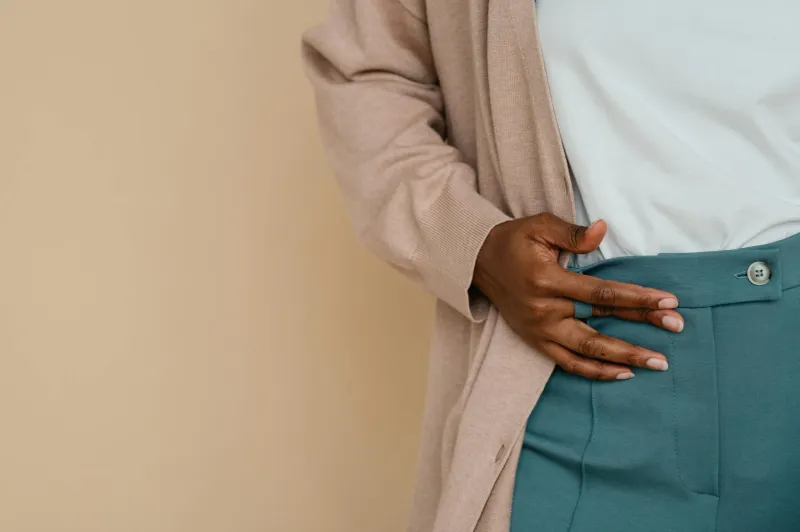
Bethany Kowalski, 34, looks incredible. Standing in her open-plan kitchen in a oatmeal-toned linen shirt, straight-leg trousers the colour of old bones, and a single gold chain that appears to have materialised around her neck through sheer force of nonchalance, she is the living, breathing embodiment of effortless chic. She looks like a woman who woke up, exhaled, and simply became stylish.
She has not slept properly in eleven days.
"I started in March," she tells me, staring at a fixed point somewhere above my left shoulder. "I just wanted a wardrobe that felt easy. Curated. You know — intentional." She pauses. "I now own four versions of the same beige trouser in slightly different weights of fabric and I can no longer remember my children's middle names."
Welcome to the front lines of Performative Minimalism — the wellness-adjacent fashion movement convincing otherwise sane adults that the path to a simpler life runs directly through a 47-tab Chrome browser session and a Depop account monitored with the vigilance of a Cold War surveillance operative.
The Mood Board That Ate Her Marriage
It began, as all modern spirals do, on Pinterest.
Bethany had been consuming capsule wardrobe content for approximately six months before she decided to act. The influencers made it look so reasonable. Soft-spoken women in Scandi-minimalist apartments gesturing towards a rail of thirty neutral garments, each one supposedly sufficient to generate 412 distinct outfits. "It's about freedom," they murmured, over footage of themselves apparently choosing an outfit in three seconds flat — conveniently omitting the four-person production crew, the professional lighting rig, and the wardrobe stylist crouching just off-camera.
Bethany constructed three separate mood boards before settling on her "aesthetic direction." The first was too coastal grandmother. The second veered, in her words, "aggressively Milanese." The third was, apparently, perfect — a constellation of muted tones, interesting textures, and women who appeared to subsist entirely on sparkling water and existential serenity.
"My husband asked if I was having a breakdown," she recalls. "I told him I was having a transformation. He slept in the guest room."
Calling in the Professionals (Plural)
Here is where the operation escalated from hobby to humanitarian concern.
Bethany hired her first personal stylist — let's call her Ingrid, because that is her name — to help "edit" her existing wardrobe. Ingrid, a woman who communicates primarily through meaningful silences and the strategic deployment of the word considered, removed approximately 80% of Bethany's clothing. She described most of it as "noise."
"She held up my favourite cardigan," Bethany recounts, "looked at it for a very long time, and then just said 'no'. Not even a full sentence. Just no."
Ingrid's prescribed shopping list — a tightly curated selection of "investment pieces" — came to roughly $2,300. Bethany describes this as "the affordable phase."
A second stylist, recommended by a woman in a Facebook group called Quiet Luxury Living (NO FAST FASHION, NO EXCEPTIONS), was brought in to cross-reference Ingrid's selections against Bethany's "body architecture" and "colour season." This consultation lasted four hours and concluded with the revelation that Bethany is a Deep Autumn who had been dressing as a Cool Summer for the better part of a decade, which apparently explained everything.
The revised shopping list came to an additional $1,700.
The Checkout Cart as Spiritual Practice
By hour nine of what Bethany now refers to only as "the Saturday," she had visited fourteen online retailers, joined two waitlists, and developed a proprietary spreadsheet tracking cost-per-wear projections on items she had not yet purchased.
"The Row had a shirt I needed," she explains, with the thousand-yard stare of a woman who has seen things. "It was $890. I told myself it would last forever. I told myself it was responsible."
She bought the shirt. She also bought the trousers to match it, because apparently wearing the shirt with anything else would create what Ingrid had previously termed "visual static."
By hour fourteen, the capsule was complete. Thirty-one pieces. Every item either ecru, stone, camel, slate, or — in one bold departure — a very muted sage. The total spend sat at just over $4,000, which Bethany notes is "obviously an investment, not an expense," in the tone of someone who has been rehearsing that sentence for a therapist.
The Effortless Lie, Laid Bare
Here's what the influencers won't tell you from their serene, uncluttered apartments: the effortless aesthetic is perhaps the most labour-intensive con in the history of clothing yourself. The women selling you the dream of a frictionless wardrobe are, behind the scenes, working with the focused intensity of people defusing ordnance. There are spreadsheets. There are colour-matching tools. There are lengthy, earnest discussions about the precise distinction between ecru and off-white that would make a philosopher weep.
The whole enterprise is, at its core, a paradox dressed in excellent linen: you must work extraordinarily hard to perform the appearance of someone who has never worked hard at all. It is the fashion equivalent of those "no-makeup makeup" tutorials that require fourteen products and forty-five minutes to achieve the look of a woman who simply has good skin.
Bethany's capsule wardrobe is, to be fair, genuinely lovely. Her kitchen looks like a film set. She reaches for an outfit each morning and — she admits — the process is faster now.
It takes her approximately four minutes.
She spent 14 hours and $4,000 to save four minutes per morning. Assuming she lives another forty years, this investment will pay off sometime around 2087.
"I feel so free," she tells me, as I gather my coat to leave. She is already re-opening Pinterest.
Clarissa Moncrieff-Webb is Vogue Victims' Senior Correspondent for Trends She Personally Finds Suspicious. She owns eleven black jumpers and considers this a personality.