Selfridges Has Opened a 'Emotional Shopping Sanctuary' and a Woman Named Araminta Will Charge You £85 to Breathe Through a Scarf Purchase
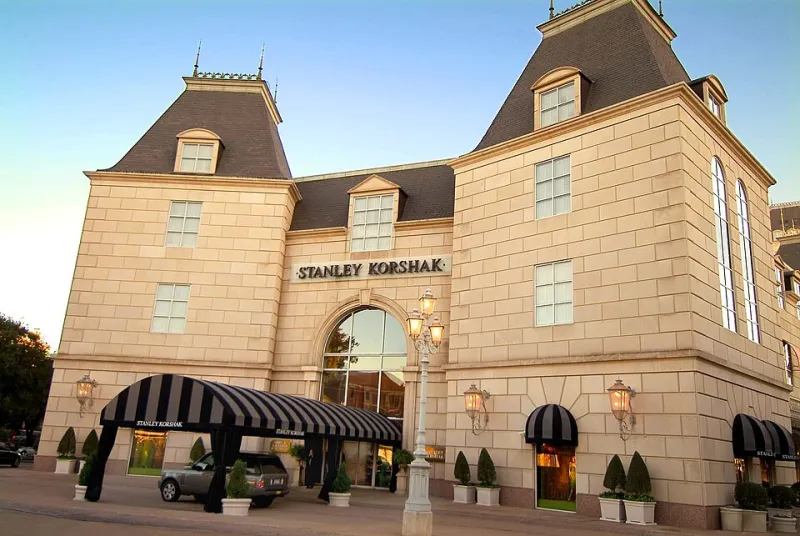
Photo: JoannaEdits, CC BY-SA 3.0, via Wikimedia Commons
Selfridges Has Opened a 'Emotional Shopping Sanctuary' and a Woman Named Araminta Will Charge You £85 to Breathe Through a Scarf Purchase
There is a corner of Selfridges' ground floor — between the perfume hall and the point where your will to live traditionally begins to waver — where something has gone profoundly, magnificently wrong. A curtained alcove, draped in what I can only describe as 'aspirational oat', houses the store's new Retail Wellness Zone: a hushed, dimly lit space where shoppers in the grip of 'purchase anxiety' can receive one-to-one emotional support before committing to a transaction. The consultant waiting inside is called Araminta. She has a clipboard, a diffuser emitting something called 'clarity mist', and an hourly rate that would make a Harley Street cardiologist feel underpaid.
 Photo: Harley Street, via c8.alamy.com
I booked the forty-five-minute 'Conscious Acquisition Session' because I am a professional, and also because my editor told me to, and also because something is clearly very wrong with all of us.
The Intake Form Was Longer Than My Mortgage Application
Araminta — who introduced herself as a 'certified somatic retail guide', a phrase I will be processing until I die — began our session with what she called a 'shopping history assessment'. This was, in practice, a questionnaire. It asked me to rate my relationship with impulse purchases on a scale of one to ten, to identify whether I shop from a place of 'lack' or a place of 'abundance', and to describe my earliest memory of a retail environment. I wrote 'Woolworths, 1994, pic'n'mix'. She wrote something in her clipboard and nodded with the gravity of a woman receiving classified intelligence.
'A lot of people who grew up with pic'n'mix,' she said carefully, 'have what we call a scarcity-driven acquisition pattern.'
I had come to buy a cashmere scarf. I had a budget of £120. I had not expected to be diagnosed.
The Breathing Exercise Took Longer Than the Actual Shopping
Before I was permitted to approach the scarf display — a curated selection of heritage-weight cashmere starting at £195, which is its own form of emotional violence — Araminta guided me through a twelve-minute breathwork sequence designed to 'clear any energetic resistance to receiving'. This involved sitting on a small stool, placing both hands on my diaphragm, and inhaling for four counts while visualising, and I am quoting directly here, 'the version of yourself who already owns the scarf and has fully integrated it into her identity'.
The woman at the adjacent lipstick counter watched this unfold with the expression of someone witnessing a minor natural disaster. I don't blame her. I was, by this point, doing controlled breathing in a department store alcove while a woman in linen trousers told me to imagine my scarf-owning future self.
I would like to point out that I have bought scarves before. I have never required spiritual preparation. I once purchased one in a motorway service station in under forty seconds and it brought me nothing but warmth and mild satisfaction.
The Intention Journal Was Non-Negotiable
Prior to physically touching any merchandise, I was presented with what Araminta called an 'intention journal': a small, beautifully bound notebook — available for purchase at the till for £22 — in which I was invited to write a statement of purpose for my acquisition. Why did I want this scarf? What void was I hoping it might address? Was I buying from a place of genuine need, or was I, as Araminta put it with the gentleness of someone delivering a terminal prognosis, 'outsourcing emotional regulation to a textile'?
I wrote: 'My neck is cold.'
Araminta read this, paused for what felt like a professionally calibrated moment, and suggested we 'go a little deeper'.
We went a little deeper. By the end, I had written a paragraph about my relationship with warmth as a metaphor for emotional safety, which I absolutely do not stand by and would like stricken from the record.
The Scarf Was Beautiful. The Debrief Was £85.
I eventually selected a charcoal cashmere scarf — lovely, genuinely lovely, the kind of thing that makes you feel briefly like a functioning adult — and Araminta accompanied me to the till with the quiet pride of a woman who has successfully guided a patient through surgery. The scarf cost £210. The session, billed separately and automatically to the card I'd registered at booking, cost £85. The intention journal, which I had written in and therefore could not return, cost £22.
Total spend on a scarf: £317.
Araminta offered me a complimentary 'post-purchase integration card' — a small laminated affirmation that read You have chosen wisely and the scarf has chosen you — and suggested I book a follow-up 'wear-in session' to ensure I was 'fully embodying the acquisition' within twenty-one days.
The follow-up session, she mentioned, was £65.
What This Tells Us About the State of Everything
Selfridges is, of course, not alone in this particular journey into the therapeutic-retail industrial complex. Across London's more elevated shopping destinations, the language of wellness has colonised the act of spending money with alarming efficiency. Purchase anxiety is now a recognised condition. Buyer's remorse has been rebranded as 'post-acquisition dissonance'. The shopping bag is, apparently, a trauma response.
What is striking is not that this service exists — in a city where you can pay someone to tell you your houseplants are emotionally unavailable, nothing is surprising — but that it is, by all accounts, extremely popular. Araminta told me she is booked solid through to February. Her waiting list has a waiting list.
Britain, it seems, has found a way to make spending money more expensive by adding feelings to it. And we are queuing around the block to get in.
The scarf is very nice. My neck is warm. I have not yet booked the integration session, but I'd be lying if I said I wasn't tempted.
The Selfridges Retail Wellness Zone is open Monday to Saturday. Sessions with Araminta start at £85. The clarity mist is not available for purchase but she'll tell you it's Himalayan something-or-other if you ask nicely.