I Paid £95 for a Woman Named Saffron to Read My Handbag Collection and She Found Childhood Trauma in My Longchamp Le Pliage
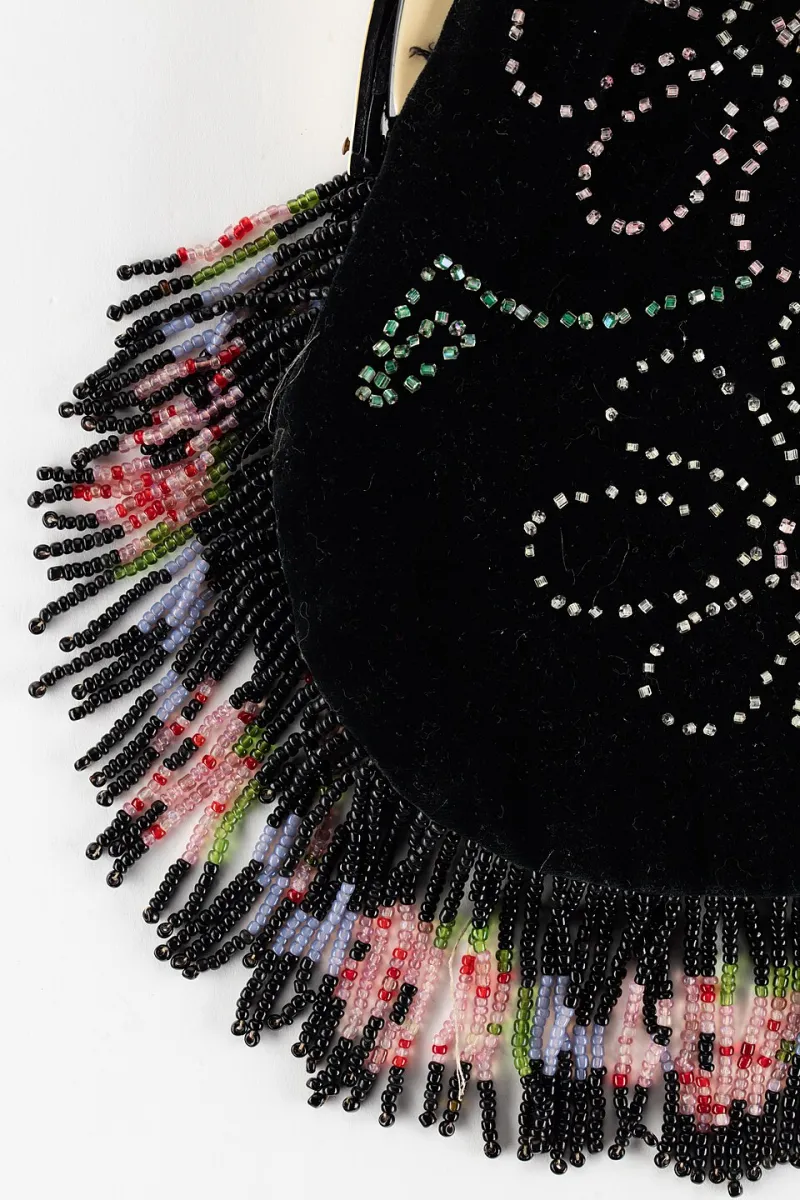
Photo: Auckland Museum Collections from Auckland, Aotearoa New Zealand, CC BY 2.0, via Wikimedia Commons
Saffron's studio is on the second floor of a converted warehouse in Dalston that also houses a ceramics collective and what appears to be a very small gin distillery. The lift is broken. There is a handwritten sign that says 'The lift is resting'. I took this as an omen and climbed the stairs anyway, carrying three handbags and what I can only describe as a low-grade existential readiness.
 Photo: Longchamp Le Pliage, via www.longchamp.co.th
I had found Saffron — full professional name: Saffron Birch-Holloway, Emotional Accessory Practitioner and Certified Attachment Pattern Reader — through an Instagram reel that appeared in my feed at 11pm on a Tuesday, which is when the algorithm knows you are most vulnerable. Her bio described her as 'a bridge between your wardrobe and your wound'. Her session packages started at £95. I booked the 'Bag Archaeology' tier, which promised 'a deep somatic reading of your handbag relationship history and the stories your choices are telling about your nervous system'.
I brought my Longchamp Le Pliage, a small structured Zara tote I bought in a moment of optimism, and a crossbody I've owned since 2019 and cannot seem to throw away despite the broken clasp. I felt, briefly, like I was bringing evidence to a trial I hadn't committed to attending.
The Intake Process
Saffron was waiting for me in a room that contained two low chairs, a diffuser emitting something that smelled like forest floor, and a low table on which she had placed a single piece of rose quartz. She was wearing linen. This was not surprising.
She asked me to place my bags on the table without explanation and then sat in silence for approximately forty-five seconds, regarding them with an expression I associate with people at contemporary art galleries who are trying to decide whether they're moved or simply tired.
'There's a lot happening here,' she said, finally.
I looked at my bags. There was a Longchamp, a Zara tote, and a crossbody with a broken clasp. I was not sure what was happening, exactly, but I was open to the possibility that it was happening.
'Can you walk me through your relationship with each of these?' she asked. 'Starting with the oldest.'
The Crossbody Confession
The crossbody, I explained, I had bought in 2019 during a period of what I now understand was 'active transitioning' (I had recently left a job and was spending a lot of time in coffee shops, which Saffron later noted was 'consistent with the crossbody energy'). I'd used it every day for about eighteen months and then gradually stopped when the clasp broke, but I'd never thrown it away because — and here I hesitated, because I could feel where this was going — it still felt useful, somehow. Potentially.
Saffron nodded with the gravity of someone receiving a confession.
'The broken clasp,' she said, 'is doing a lot of work in this story.'
She explained that carrying a bag with a broken clasp — or, in my case, keeping a bag with a broken clasp in a cupboard under the stairs for three years — was what she called 'a physical manifestation of tolerating incomplete closure'. She paused to let this land. It landed somewhere in the region of my sternum, which I think was the intended destination.
'Have you,' she asked, 'historically found it difficult to end things that are no longer fully functional?'
I thought about the crossbody. I thought about several other things. I said 'possibly' and she wrote something in a small notebook.
The Zara Tote: A Study in Optimism Trauma
The Zara tote, she felt, told a different story. It was structured, aspirational, and — she pointed this out gently — 'almost entirely unused'. I confirmed that I had bought it for a specific occasion, used it once, found it slightly too small for my actual daily requirements, and had subsequently kept it because it was pretty and I kept meaning to find occasions for it.
Saffron called this 'performative readiness'. She explained that buying a bag for a life you are not currently living, and then maintaining it in anticipation of that life, was 'a very common response to ambient anxiety about one's present circumstances'.
'You're storing hope in a bag,' she said.
I wanted to argue that I was storing a bag in a bag, specifically a bag that cost £32.99 and was not doing any emotional heavy lifting. But the forest-floor diffuser was doing something to my critical faculties, and instead I said 'that's quite interesting' and she wrote more things in the notebook.
The Longchamp Verdict
We came, eventually, to the Le Pliage. My Longchamp. The navy blue one I have owned for eleven years, replaced once when the stitching went, and replaced with an identical navy blue one because it is a perfect bag that folds flat and holds everything and has never once let me down.
Saffron picked it up. She turned it over. She unfolded and refolded it once, which felt invasive in a way I couldn't immediately articulate.
'This,' she said, 'is your most significant piece.'
I agreed that it was my most used bag.
'It's more than that,' she said. 'The Le Pliage is a bag that collapses. It is designed to make itself smaller. To fold away. To take up less space.' She looked at me with what I can only describe as compassionate significance. 'And you've owned it for eleven years and replaced it with itself when it wore out.'
There was a silence.
'What Saffron is observing,' said Saffron, who had started referring to herself in the third person, which I noted but did not address, 'is a profound fear of commitment to volume. To taking up space. To being, structurally, more than the occasion requires.'
I stared at my Longchamp. My Longchamp stared back. We had been through eleven years together and had never once discussed my fear of taking up space.
'Is there anything in your childhood,' she asked, 'that might have rewarded smallness?'
The Invoice
The session lasted seventy minutes. At the end, Saffron provided me with a handwritten 'Bag Archaeology Report' on thick cream card, which identified my 'dominant attachment pattern' as 'anxious-functional' and recommended I consider 'a structured tote with a rigid base' as 'a transitional object towards spatial confidence'.
She also recommended her eight-week 'Accessory Realignment Programme' at £480, which she described as 'a journey from functional grief to embodied presence, through your wardrobe'.
I thanked her. I picked up my bags — the crossbody with the broken clasp, the tote full of optimism, and the Longchamp that apparently contains my entire psychological history — and I walked back down the stairs past the resting lift.
On the bus home, I googled 'rigid base structured tote'. I found one I liked. It was £62 from a brand I won't name.
I put it in my basket. I left it there.
Saffron would probably say something about that.